Unrendered Arrivals: A Measurement Protocol for AI Assistant Referrals on UK Sites
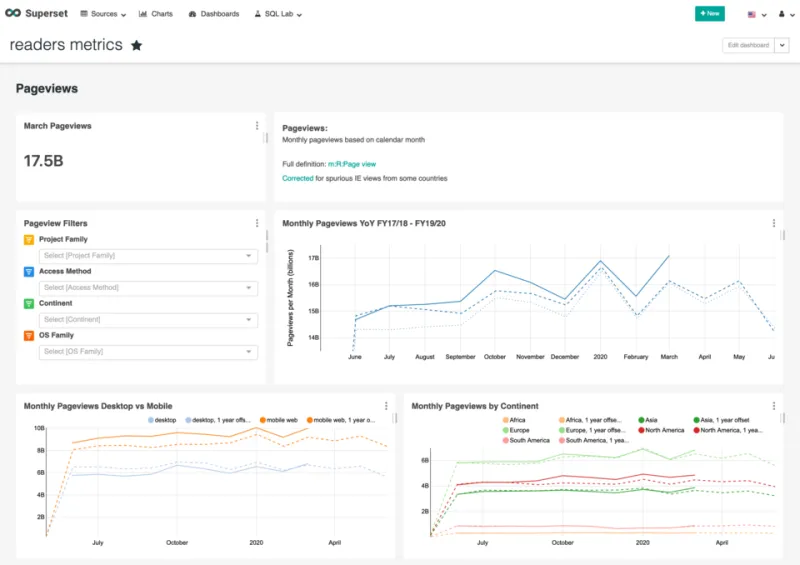
Photo: MPopov (WMF), CC BY-SA 4.0, via Wikimedia Commons
AI assistants now sit between a UK user and the site they eventually visit. The journey may begin in a chat window, continue through an in-app browser, and end on a product page or service enquiry form. To the user, it is a single act of research. To a conventional analytics implementation, it can look like direct traffic, an internal referral, or nothing at all.
That is the attribution gap this article addresses. The problem is not merely that AI assistant traffic is growing. It is that the traffic arrives through paths that many UK measurement setups were never designed to observe. If those visits are misclassified, the commercial consequences are predictable: content investment is judged against incomplete demand signals, paid and organic budgets are compared on unequal terms, and board-level pipeline forecasts inherit a blind spot.
The response should be a protocol, not a single dashboard fix.
Begin with the server log, not the dashboard
Client-side analytics remains the default reporting layer for most UK teams, but it is the wrong place to start an investigation into AI assistant referrals. Tags can fail to fire in in-app browsers, consent banners can suppress identifiers, and bot-filtering rules can discard sessions that deserve scrutiny.
Server and edge logs provide a more stable record. Look for document requests that arrive without the usual sequence of asset fetches — CSS, JavaScript, and images. This pattern can indicate a fetching agent rather than a rendered browser session, and it is one reason why some assistant-related visits never appear in JavaScript-based reporting. Compare origin logs with CDN edge logs, and segment by autonomous system number, user-agent string, request cadence, and path depth.
Agents such as ChatGPT-User, Perplexity-User, and Claude-User appear in logs, though naming conventions and behaviour change frequently. Treat user-agent strings as one signal among several, not as a definitive identity. The objective is to build an evidence trail that can be reconciled with your analytics platform.
Separate assistant referrals from assistant crawlers
A frequent error is to combine every request associated with an AI provider into a single 'AI traffic' bucket. That conflates two different phenomena: a user asking an assistant to open or summarise a page, and a provider's crawler indexing content for future retrieval.
Crawler activity should be assessed for crawl budget, server load, and content access. Assistant referrals should be assessed for landing-page intent, engagement, and commercial contribution. They belong in different reports and should have different owners.
A practical test is to require at least two corroborating signals before classifying a session as an assistant referral: a known referrer domain or campaign parameter, plus a plausible browser session with subsequent asset requests. Where the referrer is absent, use network ownership and landing-page context as supporting evidence, and label the classification as inferred rather than observed.
Rebuild the channel definition at the edge
Most UK teams will need to clean referral data before it reaches the reporting layer. Build a channel definition that recognises known assistant referrer domains, such as chatgpt.com, chat.openai.com, perplexity.ai, copilot.microsoft.com, gemini.google.com, and claude.ai. Include known campaign parameters where assistants append them, and account for the absence of a referrer when other signals are strong.
Implement the rule once in a server-side tag, a warehouse transformation, or a CDN edge function. Avoid maintaining separate regex lists in Google Analytics 4, Looker Studio, and a spreadsheet. Divergent definitions produce divergent stories, and divergent stories undermine board confidence.
Document the logic in plain English. A short measurement note — what counts, what does not, and what remains uncertain — is more valuable than a complex model that nobody can audit.
Check landing-page intent, not just volume
AI assistant referrals often land deeper than traditional organic sessions. A user may arrive directly on a comparison page, a service-area page, or a specification table. Volume alone will not reveal whether that arrival was useful.
Build a landing-page intent matrix. For each significant URL pattern, record the commercial next step, the expected micro-conversion, and the evidence that the page satisfies the query. Then compare assistant referrals with organic search and direct traffic on the same pages. If assistant traffic lands on high-intent pages but fails to progress, the issue may be page design rather than channel quality. If it lands on informational pages with no onward path, the content strategy needs a clearer route to enquiry.
Engagement metrics should be interpreted cautiously. A short session on a page that answers a question completely may be a success, not a bounce. Use scroll depth, return visits, and downstream conversions alongside time-on-page.
Make consent-safe measurement explicit
UK teams operate under UK GDPR and PECR, and the Information Commissioner's Office expects consent choices to be respected. AI assistant referrals do not create an exemption from those rules. They do, however, make consent-safe measurement more important, because the cookieless portion of traffic is likely to be disproportionately affected.
Use Consent Mode v2 where appropriate, server-side tagging to improve data control, and aggregate modelling to estimate the unobserved portion. Do not present modelled figures as deterministic counts. Where possible, use holdout tests or geo experiments to estimate incremental contribution rather than relying solely on last-click attribution.
Record the method alongside the number. A conversion estimate with a stated confidence range is more useful to a finance team than a precise-looking figure with no provenance.
Report in ranges, not certainties
Board-ready reporting should distinguish three tiers: observed traffic that carries a reliable referrer or parameter, inferred traffic identified through logs and network signals, and modelled traffic estimated to fill the consent gap. Present each tier with its limitations.
A simple reporting frame works well. Show assistant referrals as a share of total sessions with a range, show landing-page intent quality, and show pipeline contribution with an explicit confidence band. Avoid headline claims such as 'AI traffic doubled' without a denominator, a definition, and a note on data quality.
A 30/60/90 operating rhythm
In the first 30 days, audit server logs, document current channel definitions, and identify the top landing pages receiving assistant referrals. In the next 30 days, implement a single cleaned channel definition, add landing-page intent tracking, and reconcile analytics against logs. By day 90, introduce confidence bands into reporting and review whether content or conversion paths need adjustment.
The arrival may not render in the way your analytics expects. The measurement response should still be deliberate, documented, and defensible.